

Deconstructed Sarees: Beyond the Pallu

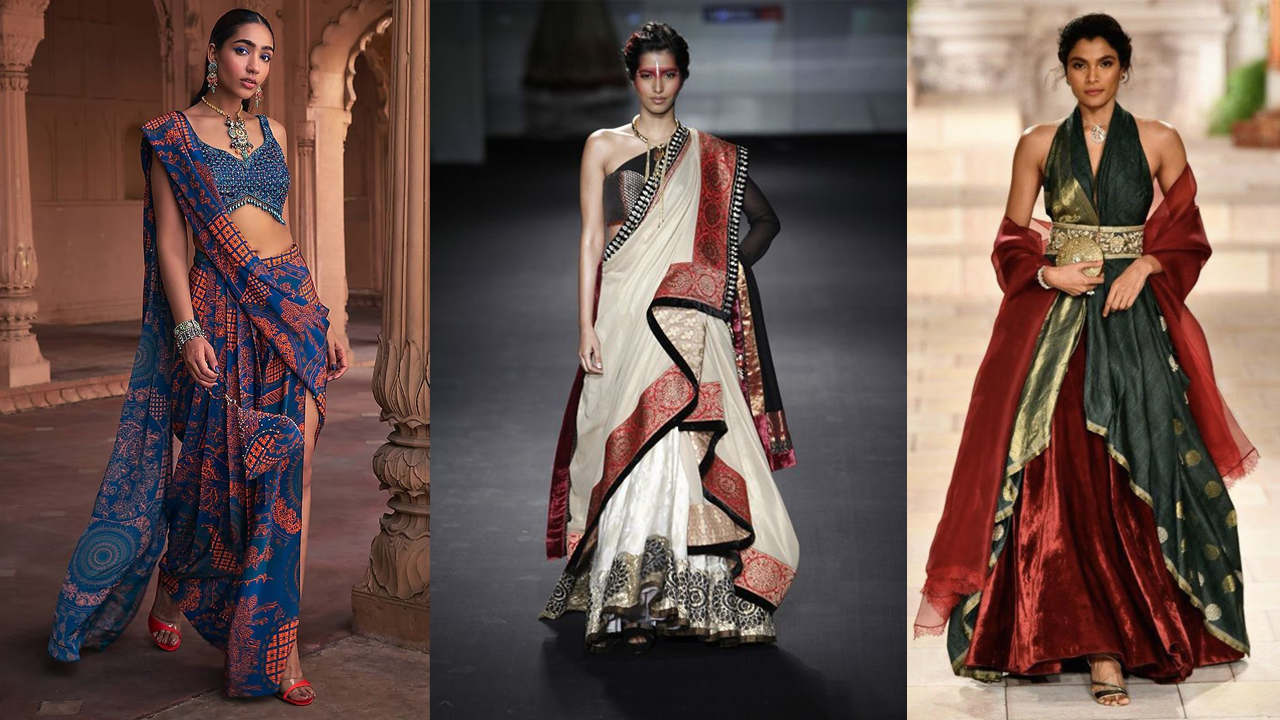

The saree, a garment that has endured for millennia, is currently experiencing one of its most radical reinterpretations. The deconstructed saree trend moves far beyond traditional drapes, inviting experimentation that challenges the very definition of the six yards. It is a movement driven by a new generation of wearers who seek convenience, individuality, and a fresh aesthetic without abandoning cultural roots. In this reimagining, the saree becomes a modular garment, capable of being worn in countless ways—pre‑stitched, asymmetrical, hybridized with Western forms, and often paired with unexpected accompaniments like sneakers, corsets, or bomber jackets.
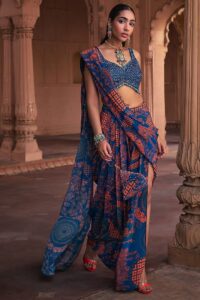
At the core of this trend is the rejection of rigidity. Traditional draping requires practice, pins, and often assistance; deconstructed versions offer ready‑to‑wear ease. Pre‑stitched sarees with built‑in pleats allow the wearer to step into them like a skirt, while the pallu can be styled as a cowl neck, a cape, or even a hood. Designers are also creating saree gowns, where the fabric is permanently fused with the structure of a Western gown, combining the silhouette of a red‑carpet dress with the essence of Indian drapery. These innovations make the saree accessible for daily wear, travel, and events where mobility is key.
The styling possibilities are endless. A classic silk saree can be paired with an oversized graphic t‑shirt for a high‑low contrast; a lightweight linen saree can be worn with a tailored blazer and belt for a sharp, office‑appropriate look. The pallu, no longer confined to the shoulder, can be draped asymmetrically, tucked in to create a sleek column, or left trailing dramatically. Footwear ranges from traditional juttis to chunky sneakers or combat boots, reflecting a Gen‑Z sensibility that prioritizes comfort and individuality.
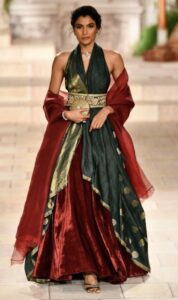
This trend also reflects a deeper cultural shift. Younger women and men are reclaiming ethnic wear as a form of self‑expression rather than obligation. The deconstructed saree is often seen at sangeets, cocktail parties, and even weddings where the dress code is “contemporary festive.” It allows the wearer to honor tradition while signaling a forward‑thinking approach. Social media has played a massive role in popularizing this trend, with influencers showcasing inventive drapes that quickly gain viral traction.
From a design perspective, the deconstructed saree has opened new avenues for innovation. Fabric weights are being recalibrated to allow easier draping; blouses are being replaced with corsets, bralettes, and even structured crop tops. Some designers are incorporating pockets into the saree—a seemingly small addition that significantly enhances functionality. Others are experimenting with reversible sarees, offering two looks in one garment.
Critics sometimes argue that deconstruction dilutes the saree’s traditional essence, but proponents see it as an evolution. The saree has always adapted—from the unstitched garments of ancient India to the silk weaves of the Mughal era to the synthetic fabrics of the 20th century. Deconstruction is simply the latest chapter. What remains constant is the saree’s versatility; it continues to be a canvas for personal and cultural expression.
Looking ahead, the trend shows no signs of waning. As more designers invest in pre‑stitched technologies and innovative draping techniques, the deconstructed saree will likely become a permanent category in ethnic wear. It bridges the gap between those who love the saree’s beauty and those who find traditional draping cumbersome. In doing so, it ensures that this iconic garment remains relevant, dynamic, and beloved for generations to come.

