


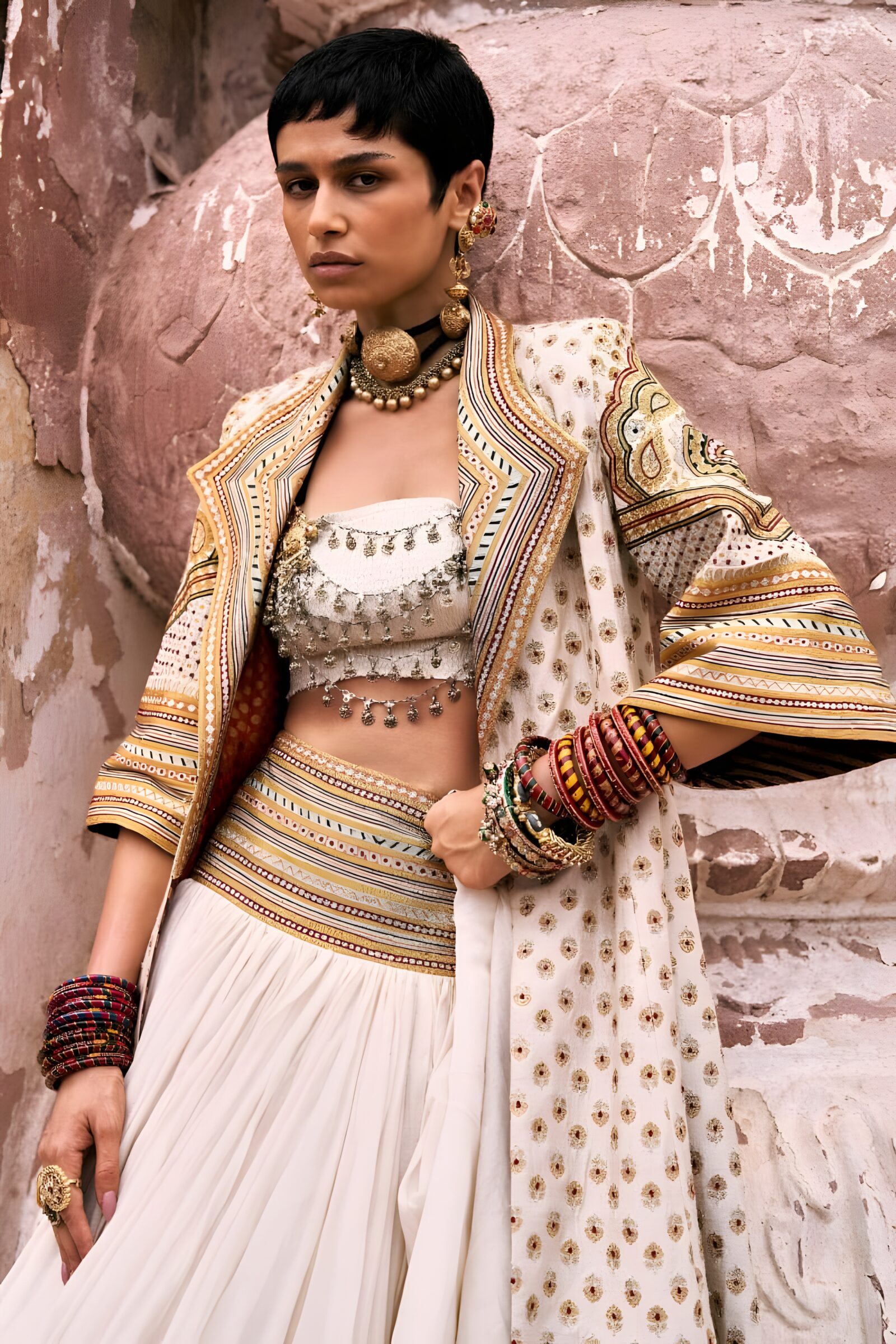

Quilting, once associated primarily with comfort and warmth, has ascended to the forefront of high fashion in recent years. In India, this quilting renaissance is particularly exciting because it draws on a rich heritage of traditional techniques—Ralli from Sindh and Gujarat, Kantha from Bengal, and various forms of patchwork from across the subcontinent. Designers are now repurposing these age‑old crafts into contemporary silhouettes like oversized puffer jackets, bomber jackets, and even quilted lehengas. The result is a fusion of artisanal narrative with modern streetwear and occasion wear.
The Ralli quilt, traditionally made by women in rural communities, involves stitching together layers of old fabric with intricate patterns in bold colors. Similarly, Kantha embroidery uses simple running stitches to create motifs and textures on recycled cotton or silk. When these quilts are transformed into jackets—with their vibrant patchwork visible on the exterior or as a lining—they become wearable art. A Ralli bomber jacket, with its geometric patterns and bright hues, is instantly recognizable and deeply personal; each piece carries the hand‑stitched history of its maker.
Puffer lehengas represent another dimension of this trend. Lightweight quilted fabric is used to create lehengas that are warm, comfortable, and surprisingly structured. They offer an alternative to traditional silk lehengas for winter weddings, combining the grandeur of occasion wear with the cozy practicality of a quilt. Designers are also creating quilted dupattas, cape jackets, and even quilted blouses, allowing for coordinated sets that feel both traditional and innovative.
Sustainability is a key driver. Many of the quilts used are upcycled from vintage textiles—old sarees, dhotis, or household linens—giving them a second life. The quilting process itself is low‑impact, relying on handwork rather than energy‑intensive machinery. By investing in these pieces, consumers support artisan communities and contribute to the preservation of techniques that have been passed down through generations.
Styling quilted garments requires attention to silhouette. Because quilting adds volume, it is often balanced with sleeker pieces. A Ralli jacket, for instance, looks best over simple black trousers or a solid kurta. A quilted lehenga can be paired with a fitted blouse and minimal jewelry to let the texture shine. Footwear is usually kept grounded—handcrafted juttis or minimalist boots—and accessories are limited to one or two meaningful pieces.

The quilting renaissance also speaks to a broader cultural moment. In a world increasingly dominated by digital experiences, there is a growing appreciation for the tactile, the handmade, and the slow. A quilted garment is the antithesis of fast fashion; it is time‑intensive, deeply personal, and imbued with the spirit of the artisan. For the wearer, it offers not just style but also a connection to tradition and community.
Looking ahead, we can expect to see quilting techniques applied to even more categories—perhaps quilted sneakers, bags, or home textiles that coordinate with apparel. As the line between fashion and craft continues to blur, the quilting renaissance is likely to inspire a new generation of designers to explore the rich repertoire of Indian textile traditions, ensuring that these skills remain vibrant and relevant.

