
Sacred Geometry: Temple Jewellery as Everyday Minimalism

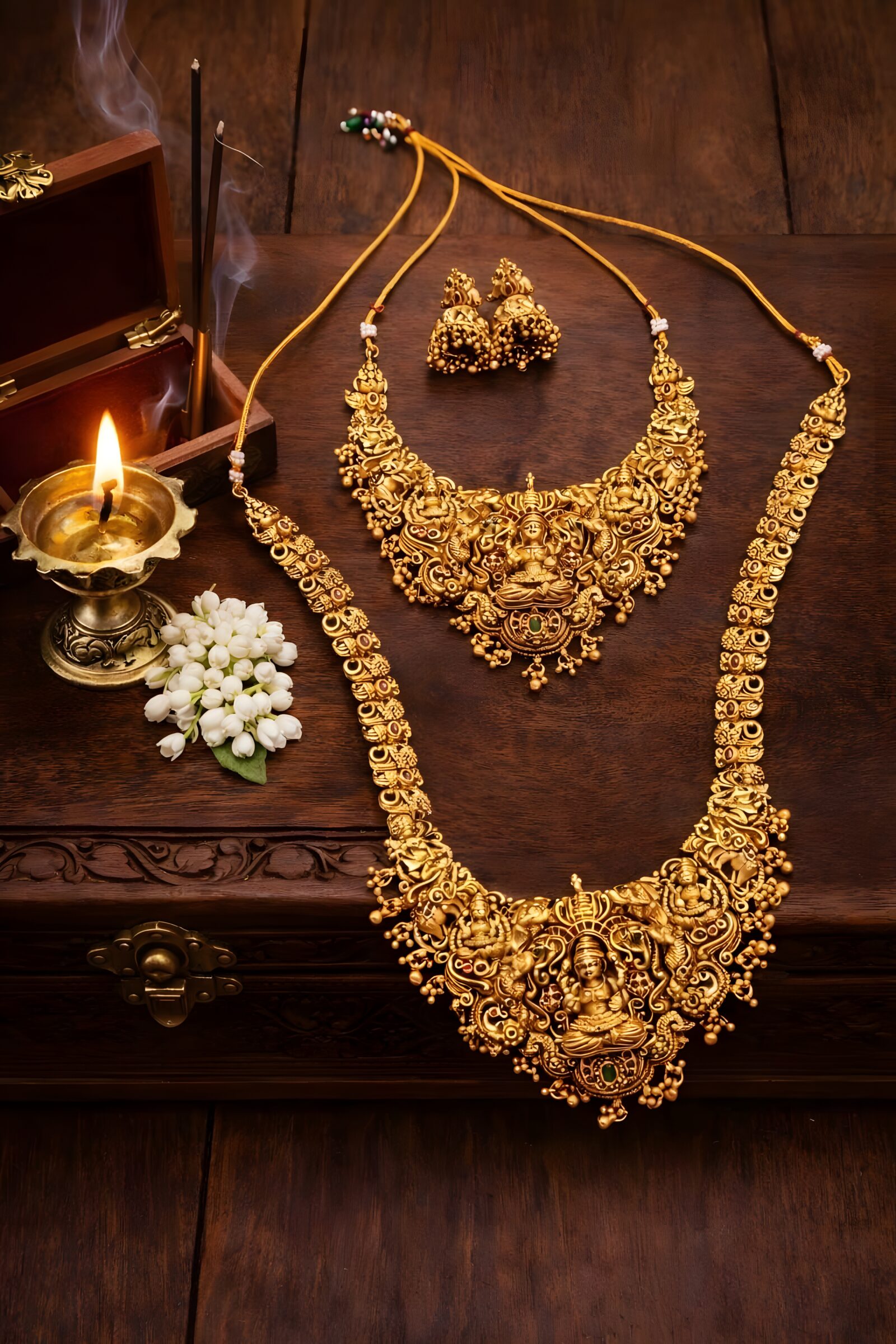

Temple jewellery, with its intricate motifs of deities, peacocks, coins, and bells, has long been associated with bridal grandeur and classical dance. Traditionally crafted in gold and often set with rubies or emeralds, it was meant to be opulent, weighty, and reserved for special occasions. But a quiet revolution is underway: temple jewellery is being reimagined as everyday minimalism. Designers are scaling down motifs, using lighter metals like sterling silver and mixed metals, and creating pieces that can be worn with modern, understated outfits. This shift allows the spiritual and cultural symbolism of temple jewellery to be carried into daily life.
The key to this transformation is proportion. Where traditional pieces featured large, elaborate pendants and heavy earrings, the new versions are delicate—coin pendants no larger than a thumbnail, jhumkas that graze the earlobe rather than the shoulder, and stacked rings featuring tiny bells or peacock motifs. Finishes are often matte or oxidized, giving them a contemporary edge. Layering is encouraged: a small temple coin necklace can be worn alongside a simple gold chain, or multiple thin bangles can be mixed with minimalist cuffs.
This trend resonates strongly with a generation that values meaningful accessories but finds traditional bridal sets impractical for daily wear. A temple coin pendant on a long chain adds a touch of heritage to a crisp white shirt; small jhumkas elevate a tailored blazer; a ring with a Ganesha motif becomes a subtle talisman. The pieces are versatile enough to transition from office to evening, offering a sense of grounding and identity in a fast‑paced world.
Craftsmanship remains central, even at this smaller scale. Artisans who specialize in temple jewellery are applying their skills to create these miniature versions, often using traditional techniques like granulation, filigree, and hand‑engraving. Some designers are incorporating ethical practices such as using recycled metals and traceable gemstones, appealing to conscious consumers. The result is jewellery that is both beautiful and responsible.
Styling sacred geometry pieces requires a light touch. Because the motifs carry cultural weight, they are best showcased against simple backdrops—neutral fabrics, clean lines, minimal patterns. One or two pieces are sufficient; the goal is to let the jewellery speak without overwhelming the outfit. For evening wear, a slightly larger pair of temple jhumkas can serve as a statement piece, paired with a solid silk kurta or a sleek gown.
Beyond aesthetics, this trend reflects a deeper desire to integrate spirituality into everyday life. In a world where many seek meaning beyond materialism, wearing a piece of jewellery that symbolizes protection, prosperity, or devotion can be a personal practice. It is a way of carrying one’s heritage and beliefs close, without the need for ritual or occasion.

The movement also helps preserve an ancient craft. By creating a market for everyday temple jewellery, designers ensure that the skills required to produce it remain economically viable. Artisan communities that might otherwise be displaced by machine‑made imitations find new relevance. As this trend grows, it is likely to inspire further innovation—perhaps temple jewellery in unconventional materials like wood or ceramic, or collaborations with contemporary artists. What remains constant is the reverence for the sacred geometry that has adorned Indian culture for centuries, now made accessible for the modern wearer.

