

Ice and Altitude: Essential Skills for Winter Mountaineering

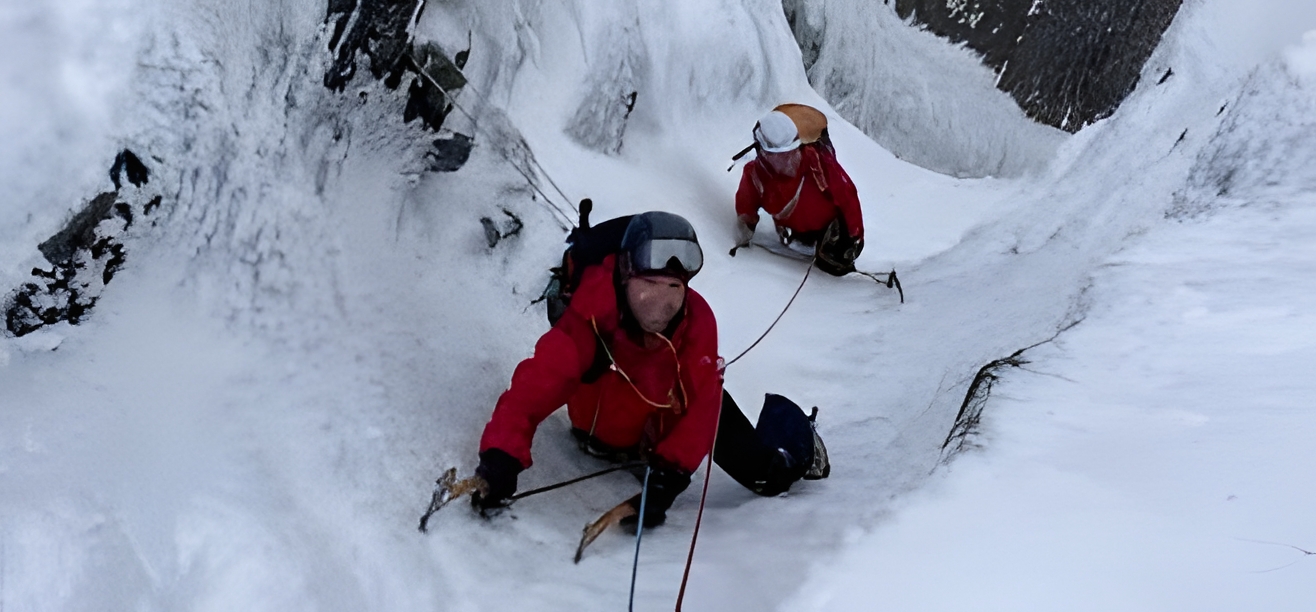

Winter transforms familiar peaks into serious mountaineering objectives. The addition of snow, ice, and frigid temperatures demands a new set of skills—and a deep respect for the mountain environment. Whether you’re eyeing a winter ascent of Mount Washington, a glacier climb on Mount Baker, or a Scottish Munro in winter, proficiency with ice axe and crampons is non‑negotiable.
The ice axe is your most versatile tool. Choose one that reaches from your wrist to the ground (typically 50–70 cm). Learn the three primary grips: the cane (for low‑angle travel), the dagger (for steeper ground), and the anchor (for self‑arrest). Self‑arrest—stopping a sliding fall—is a skill you must practice until it’s instinctual. On a safe, snow‑covered slope, practice sliding face‑down, feet‑first, and head‑first, driving the pick of the axe into the snow while rolling onto your chest and digging in your knees and toes.
Crampons turn your boots into spikes. For general mountaineering, a 12‑point steel crampon with anti‑bott plates is standard. Practice walking on flat ground before heading uphill: adopt a slightly wider stance to avoid snagging your pants, and use the “French technique” (flat‑footing) on low‑angle slopes, switching to “front‑pointing” on steep ice. Ensure your crampons fit your boots perfectly—a loose crampon is a hazard.
Avalanche awareness is not optional. Before any winter outing, check the local avalanche forecast (e.g., the Northwest Avalanche Center or the Scottish Avalanche Information Service). Carry a transceiver, probe, and shovel, and know how to use them. Even on low‑angle terrain, a slope of 30 degrees or more can slide. Learn to identify red flags: recent avalanches, shooting cracks, and whumpfing sounds.
Layering is your defense against hypothermia. Start with a merino wool or synthetic base layer, add a mid‑layer fleece or softshell, and top with a hardshell jacket and pants that are fully waterproof and breathable. Carry a belay parka (synthetic insulation) to throw on during stops. Mittens are warmer than gloves; bring two pairs. Eyewear is crucial—glacier glasses or goggles prevent snow blindness and protect from wind.
Movement efficiency preserves energy and warmth. On snow, use a rest step (locking your knee with each step) to conserve leg strength. On ice, keep your arms low to maintain balance. Plan your route to avoid avalanche terrain; if crossing a slope, do so one at a time and keep exposure minimal.
A classic beginner winter peak like Mount Baker (via the Coleman‑Deming route) or the Tour de Mont Blanc winter variation offers a manageable introduction, especially with a guide. These routes teach rope travel, crevasse rescue fundamentals, and the rhythm of alpine starts (beginning at 2 a.m. to beat the sun).
Winter mountaineering rewards patience and preparation. The silent, snow‑clad world, far from summer crowds, offers a profound sense of accomplishment. But it demands humility. Start with a course, practice skills on small slopes, and always respect the mountain’s winter mood—it can shift from serene to savage in minutes.

